





Wednesday, January 14, 2026
Automating Solar Plant Design with Autodesk Platform Services
By
Shashwat Dhase
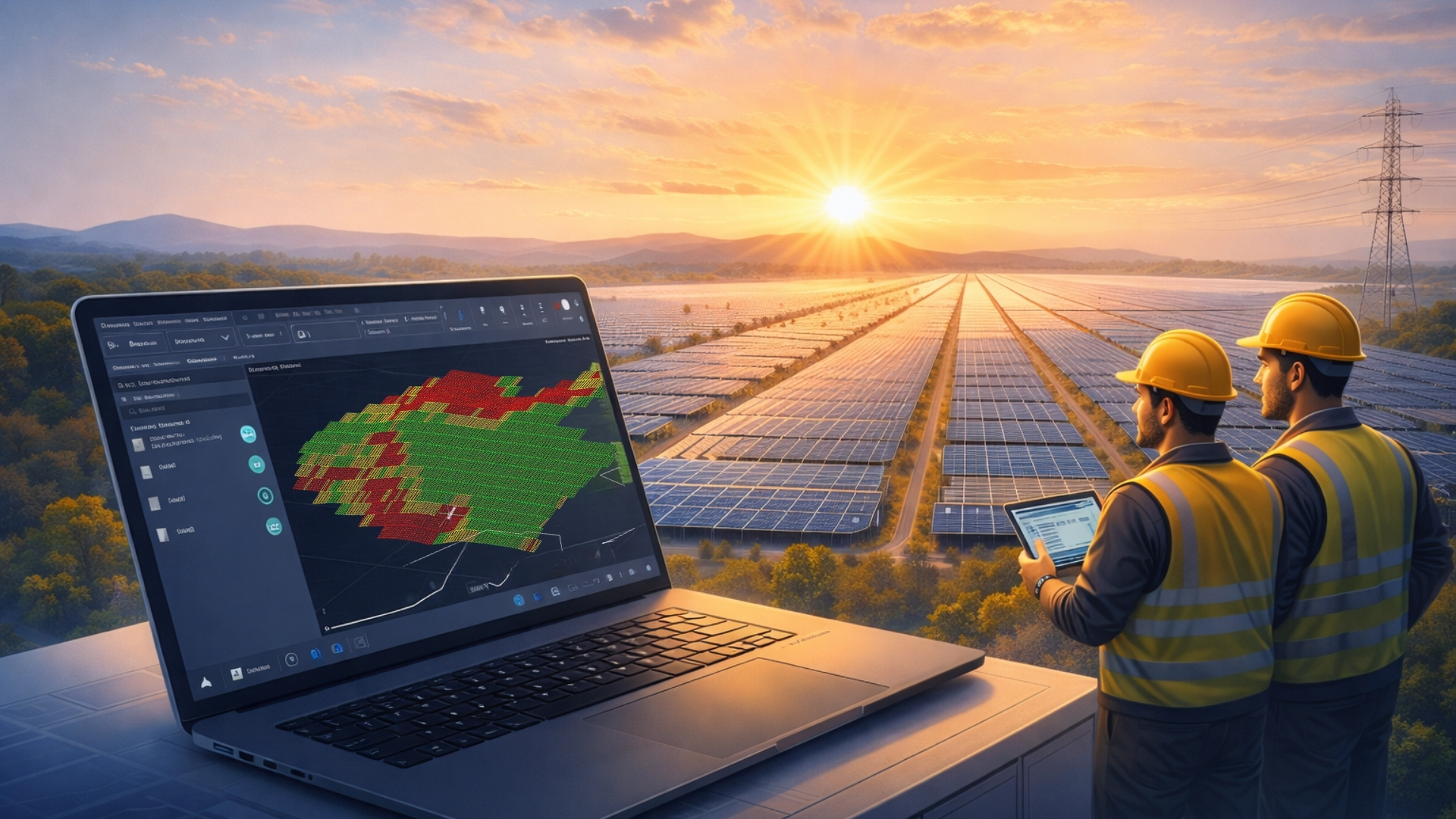
Utility-scale solar development is becoming bigger and more complex at breakneck speed. Traditional design methods are a bottleneck. As developers race to construct gigawatt-sized solar plants, the old ways of designing are becoming a major issue. Manual CAD activities, fragmented information, and design iterations lead to delays in execution, cost increments, and increased errors.
Automation of solar plant design will be a key enabler for the development of utility-scale solar, making it faster, more accurate, and cheaper. This has been made available through advanced automation platforms such as CCTech Green Energy.
The Design Challenge for Utility-Scale Solar
There is more to it than simply sticking panels in the ground. The land on which the plant will be developed needs to be surveyed, consider changes in topography, piles, and other civil works, along with access roads, cabling, etc. This information is crucial to keep everything under control regarding the project schedule and compliance.
The Traditional Workflow Is Plagued with Numerous Deficiencies, Such As:
- Design cycles are too long and span weeks to months
- Manual CAD process revisions result in costly mistakes
- Engineering changes lead to dozens of drawing errors
- Inability to scale designs across multiple locations
The Increasing Demand for Automation of Solar Plant Design
Automation in solar plants is the process of creating design workflows for repetitive manual tasks based on specific rules. By extracting engineering logic, CAD environments, and terrain integration data, engineers can generate optimized solar layouts very quickly. This change turns the design from hard, manual drafting into a scalable engineering process.
Tangible Impact: Speed, Cost, and Accuracy
“The effect of automation on utility-scale solar design is not additive—it's transformative.”
-
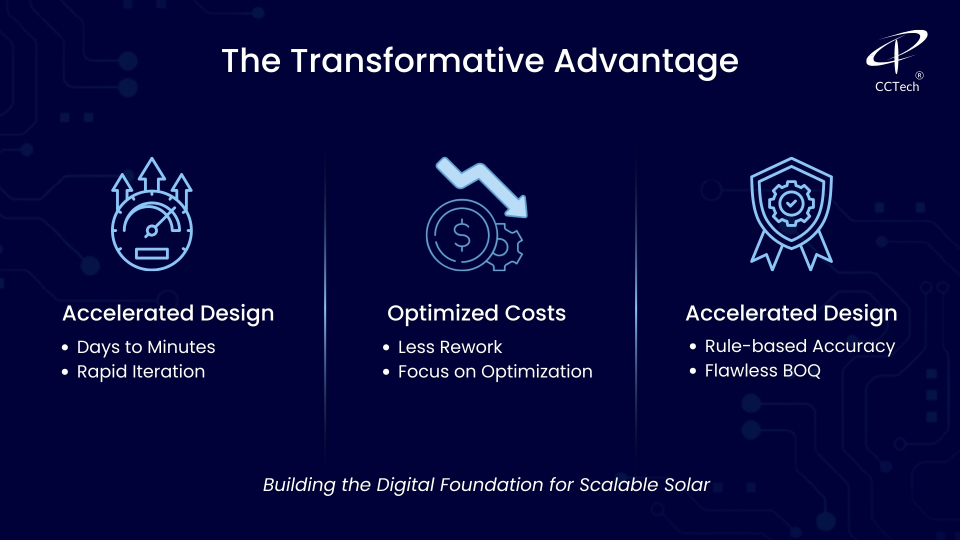
Faster Design Cycles
Things that used to take days or weeks can now be done in minutes. Design teams can iterate quickly, explore alternatives, and complete a final layout without delaying the schedule. -
Reduced Design Costs
Automation reduces duplicated CAD work, thus reducing rework. Hence, teams can now produce more with less, which allows engineers to focus on optimization rather than drafting. -
Higher Accuracy and Consistency
Rule-based automation ensures that designs adhere to predetermined engineering standards. This significantly minimizes human errors, meaning you have better data consistency, more accurate BOQs, and ready-for-construction results.
Solar CAD Automation at Scale: Use Cases
- Faster adaptation to terrain changes
- Consistent engineering quality across regions
- Easier collaboration between design, procurement, and construction teams through detailed outcomes
It also builds a digital foundation for downstream workflows, so you can handover to construction and operations in a more streamlined fashion.
Design Automation: A Strategic Boon for Solar Developers
In 2026, velocity and scale are competitive advantages. Developers using manual methods put themselves at risk of delays, cost overruns, and missed market opportunities. Adopters of automation respond more quickly to tenders, shorten project schedules, and deliver better overall project economics.
CCTech Green Energy Platform is a great demonstration of this transformation, guiding utility-scale solar teams from labour-intensive design to industrialized and repeatable engineering workflows.
Looking Ahead
Design automation will become a requirement, not an option, as utility-scale solar proliferates across the world. By embracing the automation of solar plant design, companies can unlock faster execution, lower costs, and a sense of certainty throughout project delivery—establishing new measures for excellence in solar engineering beyond 2026.
About author
Shashwat Dhase
Shashwat Dhase is a Manager – Renewable Solutions at CCTech, driving green energy technology engagements and initiatives. He works closely with renewable energy developers, EPCs, and enterprise stakeholders to identify the right opportunities and deliver meaningful business outcomes. With strong expertise in consulting and strategic partnerships, he supports end-to-end customer success. He plays a key role in shaping CCTech’s renewable energy offerings by aligning market needs with effective technical execution. Passionate about innovation, he focuses on solving real industry challenges and accelerating digital transformation across the green energy sector.
To understand how the CCTech Green Energy Platform can support your needs, please connect with our author at shashwat.dhase@cctech.co.in
Comments
Recent posts