




Wednesday, March 11, 2026
CCTech Hackathon Spotlight: Team Limitless Wins with AI-Powered 2D to 3D CAD Conversion
By
Riyaelza Pappachen
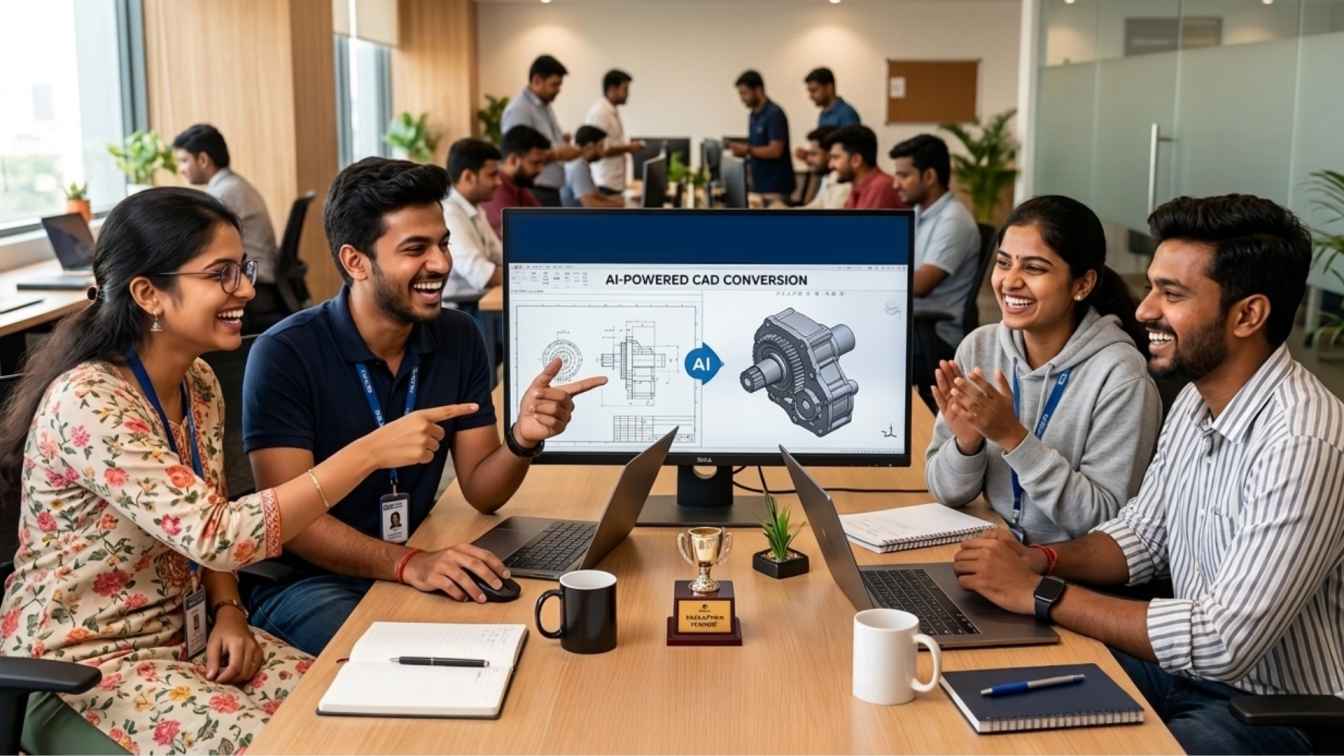
AI-Powered 2D to 3D CAD Conversion
Bold thinking meets practical challenges: CCTech's internal hackathon unleashed innovation, with Team Limitless presenting a breakthrough for persistent design problems.
"The process of manually converting 2D CAD drawings into accurate 3D models."
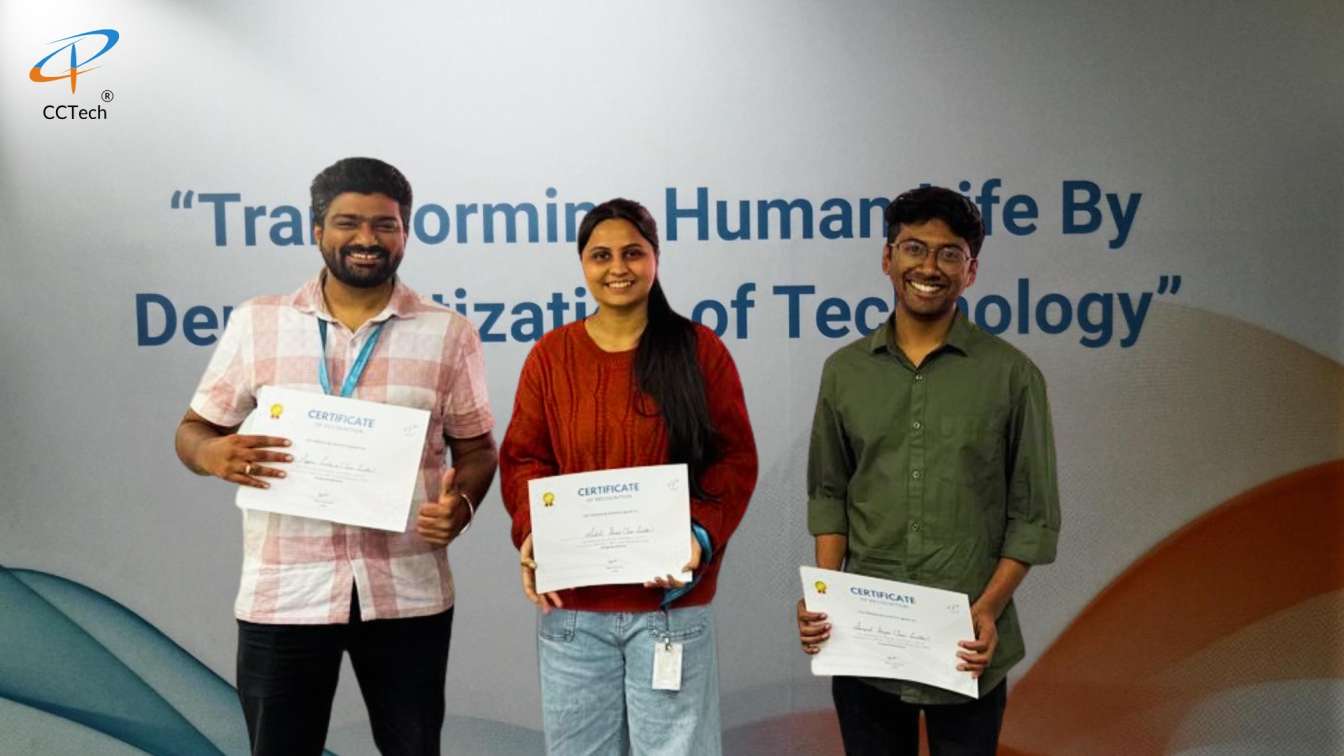
Their AI-powered 2D -to-3D CAD conversion solution addressed a major bottleneck and demonstrated clear potential for real-world use in CAD digitization and design automation processes.
The Real-time Challenge
Digital engineering and CAD are going through significant technological advancements. However, many organizations have relied on 2D CAD drawings for many years. Drawbacks of 2D drawing are:
- Time-consuming and manual
- Prone to errors
- Face scaling challenges across assemblies and standards
- Complex Geometries for CAD conversion
Team Limitless worked hard on these challenges and provided a solution based on intelligent modeling and AI CAD automation.
Spotlight Solution
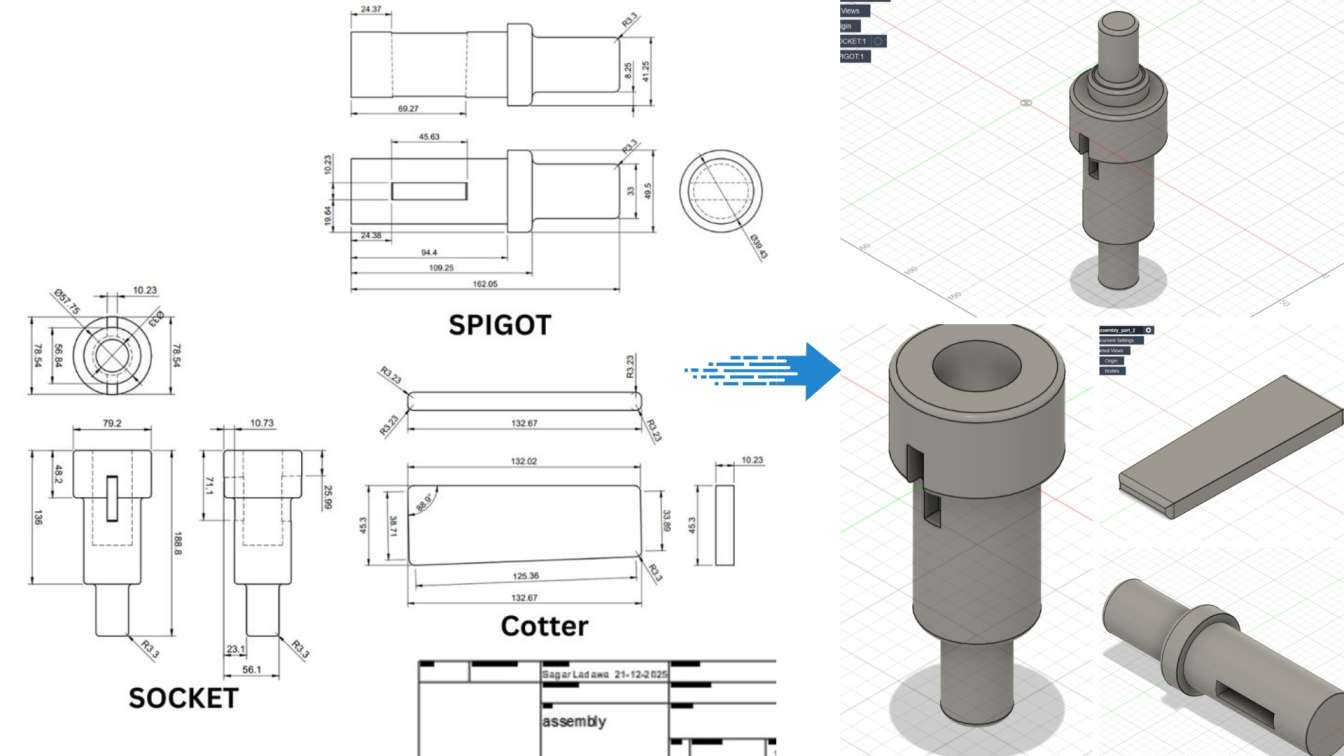
The team created a workflow that uses artificial intelligence (AI) to convert 2D CAD (computer-aided design) images into 3D models. This enables the process of converting paper or digital 2D design drawings into digital 3D representations, which supports automated design tasks.
How it works:
- As a first step, the user needs to upload a 2D CAD image.
- AI helps in design automation and interprets geometry, structure, and forms.
- At last, a 3D CAD (computer-aided design) model is generated with the help of automation.
Key Capabilities
- Time Efficient: Generating a 3D CAD model takes only a few minutes.
- Assembly Intelligence: AI CAD automation separates individual components and complex assemblies.
- Flexible Output: The generated output is detailed, and this helps in faster visualization.
- Rework: Due to automation, manual rework and errors are reduced.
Technology Stack
Team Limitless implemented AI-enabled technology with the following technology stacks-
- AI & LLMs: OpenAI, Gemini, Claude, and open-source LLMs
- Backend: Python, CadQuery, LangChain, OpenCV, Pillow
- Frontend: Streamlit
To reduce AI hallucinations, the team created structured prompts using bounding-box techniques. This streamlines the 2D to 3D CAD conversion pipeline and fixes isolated portions. It enabled strong AI reasoning, visual interpretation, and faster iterations.
Positive Impression and Road to the Future
The judges were impressed with the solution because it was designed for practical engineering problems of CAD digitization and design automation. It requires minimal input from the user, increases productivity, and helps the enterprise in its faster adoption.
Moving forward, the team intends to integrate interactive features into the systems. It will include DWG, DXF, and PDF formats, constraint-aware modeling, smarter assembly intelligence, PLM integration, and conversational CAD workflows.
Conclusion
Team Limitless achievement highlighted CCTech's commitment. Our teams are enthusiastic about turning complex engineering challenges into smart and scalable solutions. Their winning solution shows the advantages of AI-based CAD conversions for enhancing engineering and designing automation workflows.
A well-deserved first place and a strong signal of what’s possible when innovation meets execution.
About author
Riyaelza Pappachen
Riyaelza Pappachen is a dedicated Software Development Engineer in Test (SDET) at CCTech, where she works in the AEC (Architecture, Engineering, and Construction) domain with a strong focus on Autodesk ReCap. She plays a key role in ensuring the quality, performance, and reliability of the ReCap product through comprehensive manual and automated testing. She has expertise in identifying and resolving defects in ReCap workflows and development cycles
Comments
Recent posts