





Tuesday, March 24, 2026
HVAC Design Automation in Revit Using AI
By
Riyaelza Pappachen
HVAC Design Automation in Revit Using AI
The Architecture, Engineering, and Construction (AEC) industry is changing rapidly due to project growth, strict deadlines, and growing attention to efficiency and sustainability. Digitalization through Building Information Modelling (BIM) has become a key enabler of this transformation. BIM uses software such as Autodesk Revit to attain modern design workflows. Nevertheless, despite this digital transformation, the majority of the HVAC design processes in Revit are manual, time-consuming, and prone to inefficiencies. This gap highlights the need for AI-based automation to enhance the speed, accuracy, and scalability of design.
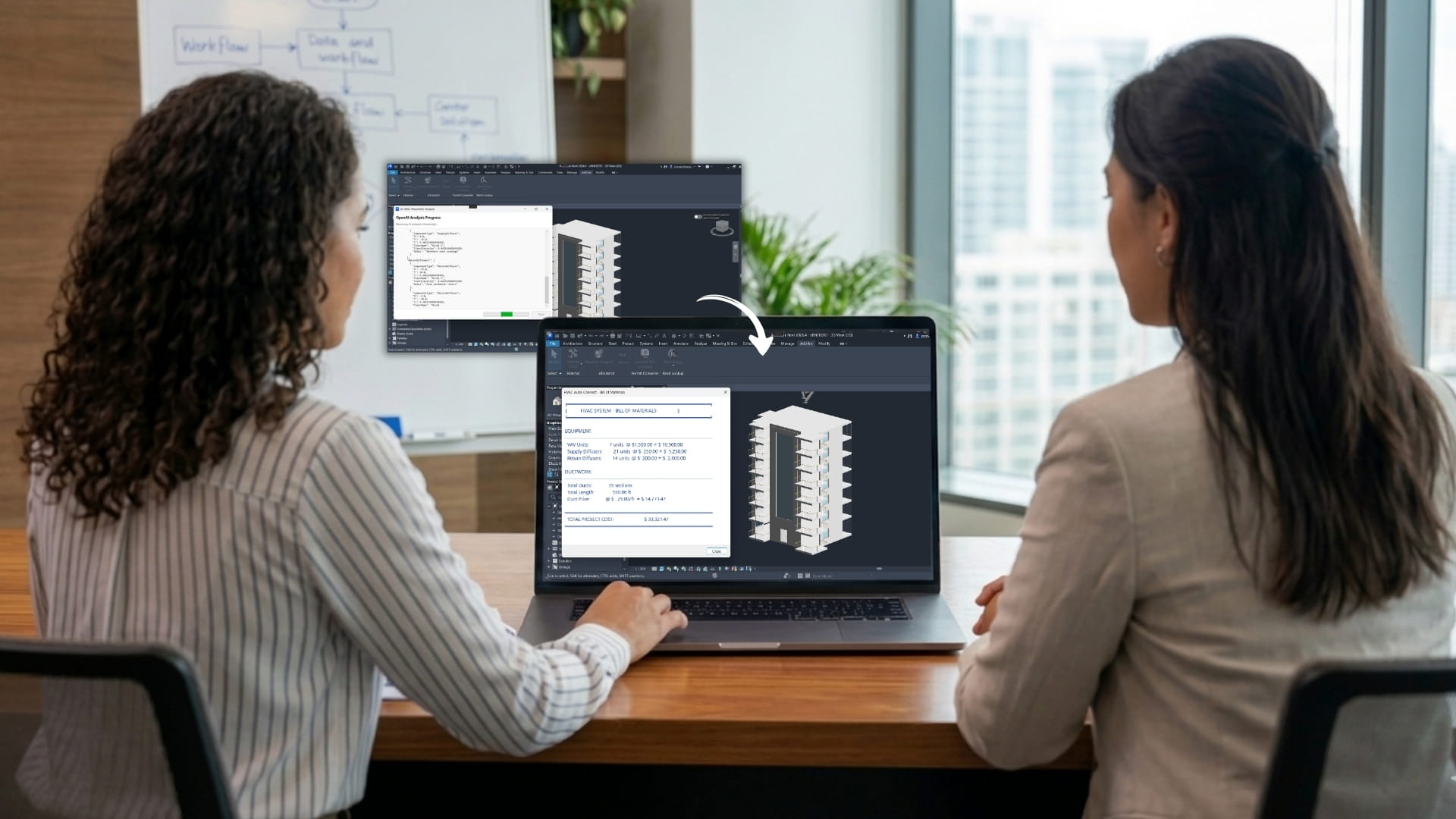
As a solution to this industry issue, CCTech employees showcased a solution during its internal hackathon. The concept was presented by Pranay of the team Vector Space. He undertook the project individually and developed a working prototype that proved how AI could have a significant impact on the workflows of HVAC design.
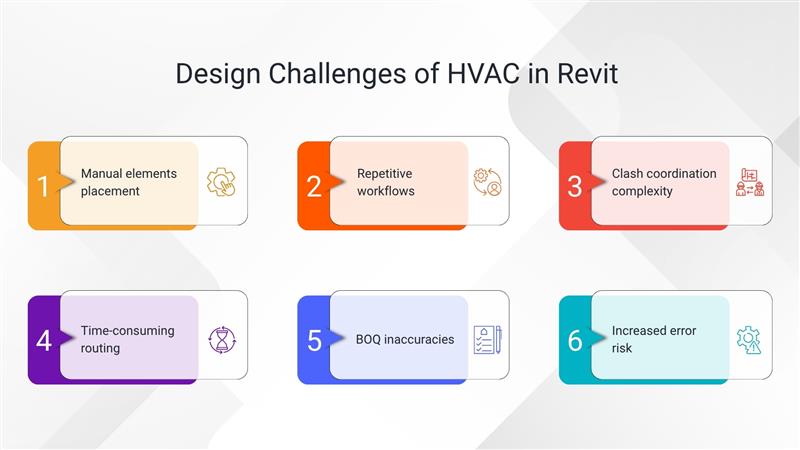
The HVAC system design in Revit is a manual procedure, whereby components of the HVAC system, including diffusers and Variable Air Volume (VAV) devices, are placed manually and connected through duct networks. These problems get multiplied when engineers have to deal with large buildings. Iterative duct routing, coordination with other disciplines, and production of valid Bills of Materials (BOQs) consume more time. All of these activities are not only repetitive but also require careful coordination to avoid clashes.This could also lead to design errors, delays in project delivery, compromised quality, and cost overruns.
5.1 The Solution: HVAC Automation with AI
The HVAC design workflow integrates AI into the system design process, changing the way systems are developed in Revit.
The solution is initiated with the Revit building model, where floor and spatial data are extracted, using an AI-based Floor Extractor Agent and Revit plugin. The HVAC equipment placement agent utilizes this data to position diffusers and VAV units. It includes a human-in-the-loop validation process. With approval, the system automatically runs duct routing and links components. Finally, a Bill of Materials (BOM) is created, which allows for quick cost estimation
The solution is initiated with the Revit building model, where floor and spatial data are extracted, using an AI-based Floor Extractor Agent and Revit plugin. The HVAC equipment placement agent utilizes this data to position diffusers and VAV units. It includes a human-in-the-loop validation process. With approval, the system automatically runs duct routing and links components. Finally, a Bill of Materials (BOM) is created, which allows for quick cost estimation
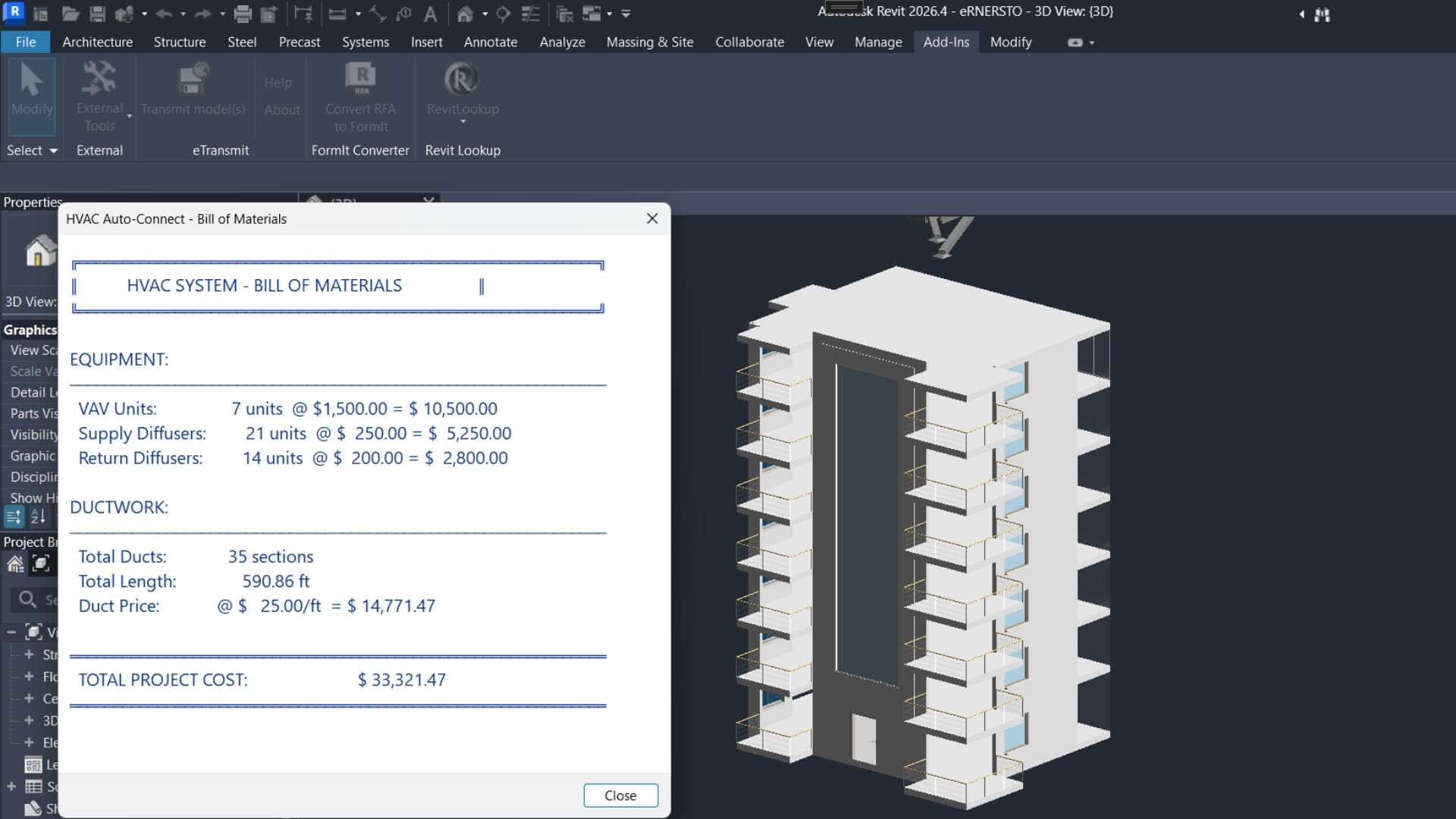
Seamless interaction with BIM models makes the solution compatible with Revit. It provides project control to engineers and considerably reduces manual effort. All the outputs are generated through an integrated stack of C#, Revit, and OpenAI-powered agents.
5.2 The Need for AI-Driven HVAC Design and its Benefits
The AEC industry is increasingly adopting digital and data-driven approaches. However, automation within BIM workflows still needs to be mature. The need to find designs faster with precision is increasing as more complex projects come into the spotlight.
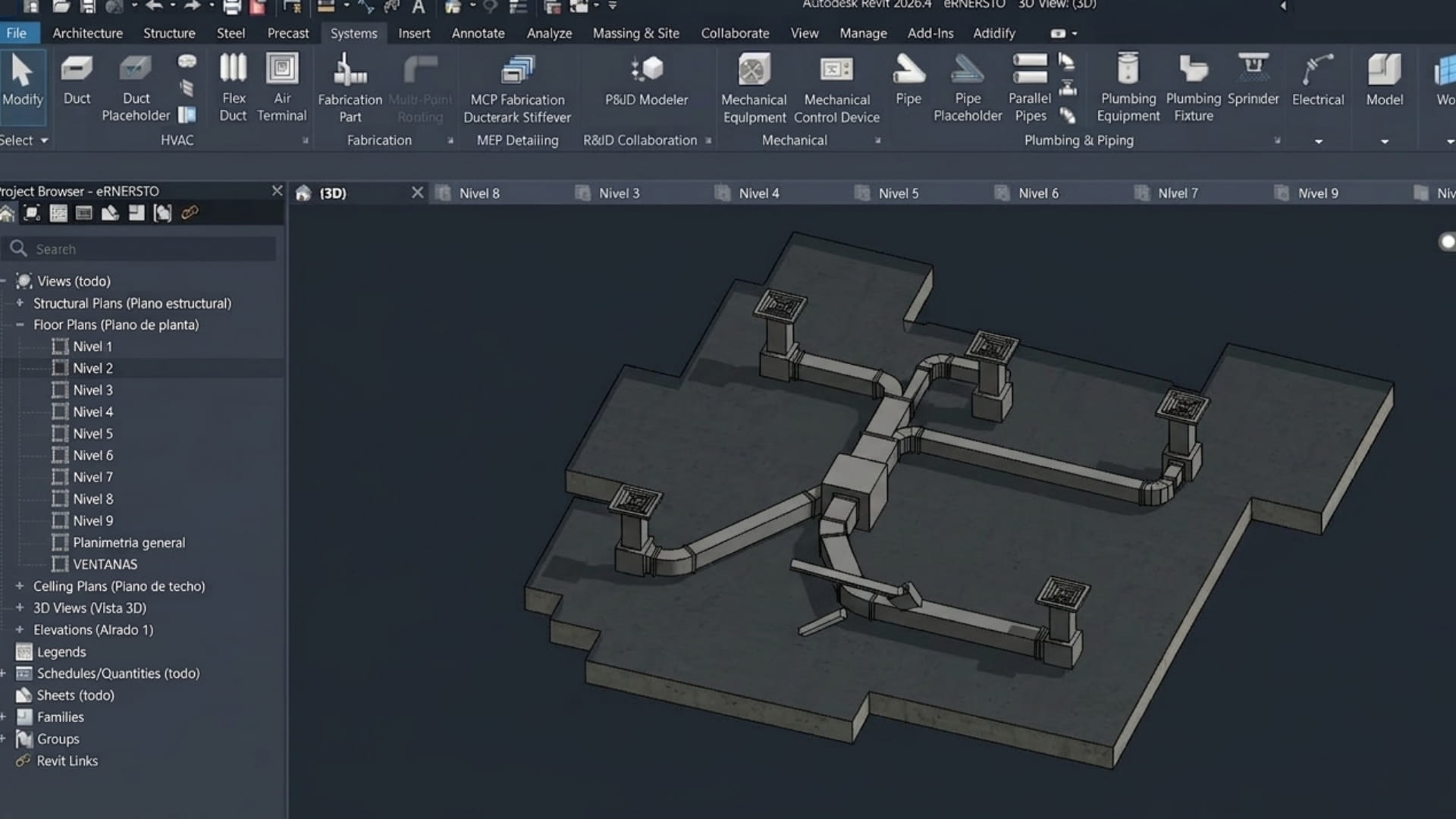
HVAC design with AI conforms to more general trends in the industry, including the generative design, digital twins, and Industry 4.0. Organizations adopting such techniques can enhance their productivity, minimize costs, and offer better quality results.
Practical advantages of HVAC design automation in Revit, which draws the attention of MEP engineers, BIM modelers, HVAC consultants, AEC design teams, and project managers, are-
- Reduced Design Time: Speeds up HVAC modeling and duct routing, accelerating project delivery
- Lower Error Risk: Minimizes manual intervention, reducing design and coordination errors
- Improved Cost Transparency: Automated BOM generation enables accurate and quick cost estimation
- Scalability: Efficiently handles complex geometries and large-scale building models
- Design Consistency: Standardized logic ensures uniform quality across projects
- Better Decision-Making: Real-time insights support more informed design choices
5.3 Key Application Areas
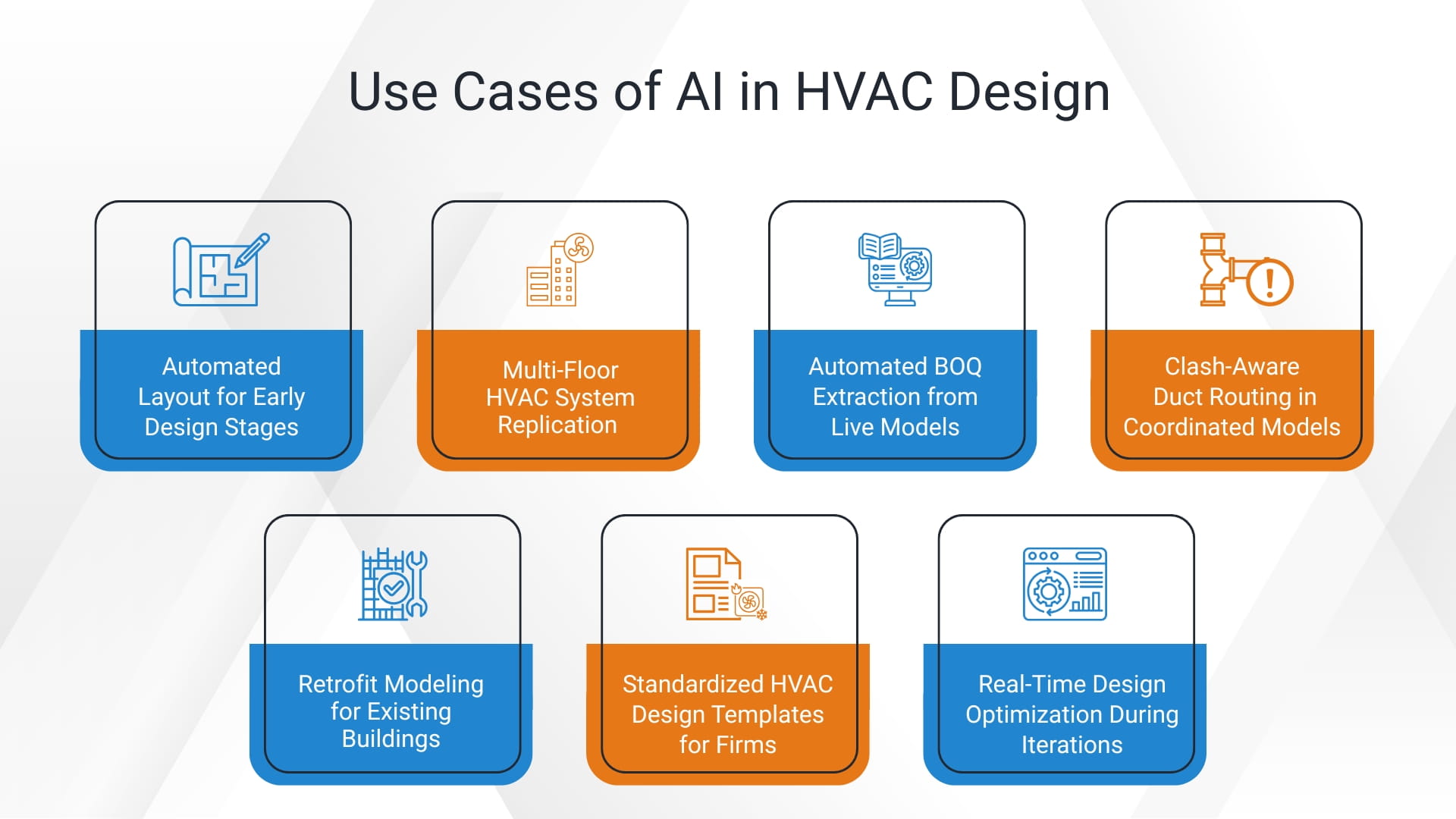
Automation in design-build projects enables engineers to convert ideas into practical applications more quickly. It is also beneficial in retrofit and renovation projects because AI can easily adapt HVAC systems to existing BIM models.
5.4 Future Outlook
Energy analysis, predictive optimization, and cross-disciplinary coordination in BIM environments may be part of future developments. Integration of AI will help the evolution of HVAC designs to be more intelligent, data-driven, and sustainable. It transforms the way engineers design building systems.
About author
Riyaelza Pappachen
Riyaelza Pappachen is a dedicated Software Development Engineer in Test (SDET) at CCTech, where she works in the AEC (Architecture, Engineering, and Construction) domain with a strong focus on Autodesk ReCap. She plays a key role in ensuring the quality, performance, and reliability of the ReCap product through comprehensive manual and automated testing. She has expertise in identifying and resolving defects in ReCap workflows and development cycles
Comments
Recent posts