



Tuesday, May 26, 2026
Solar Design Automation for Faster Project Growth
By
Shashwat Dhase
Solar Design Automation for Faster Project Growth
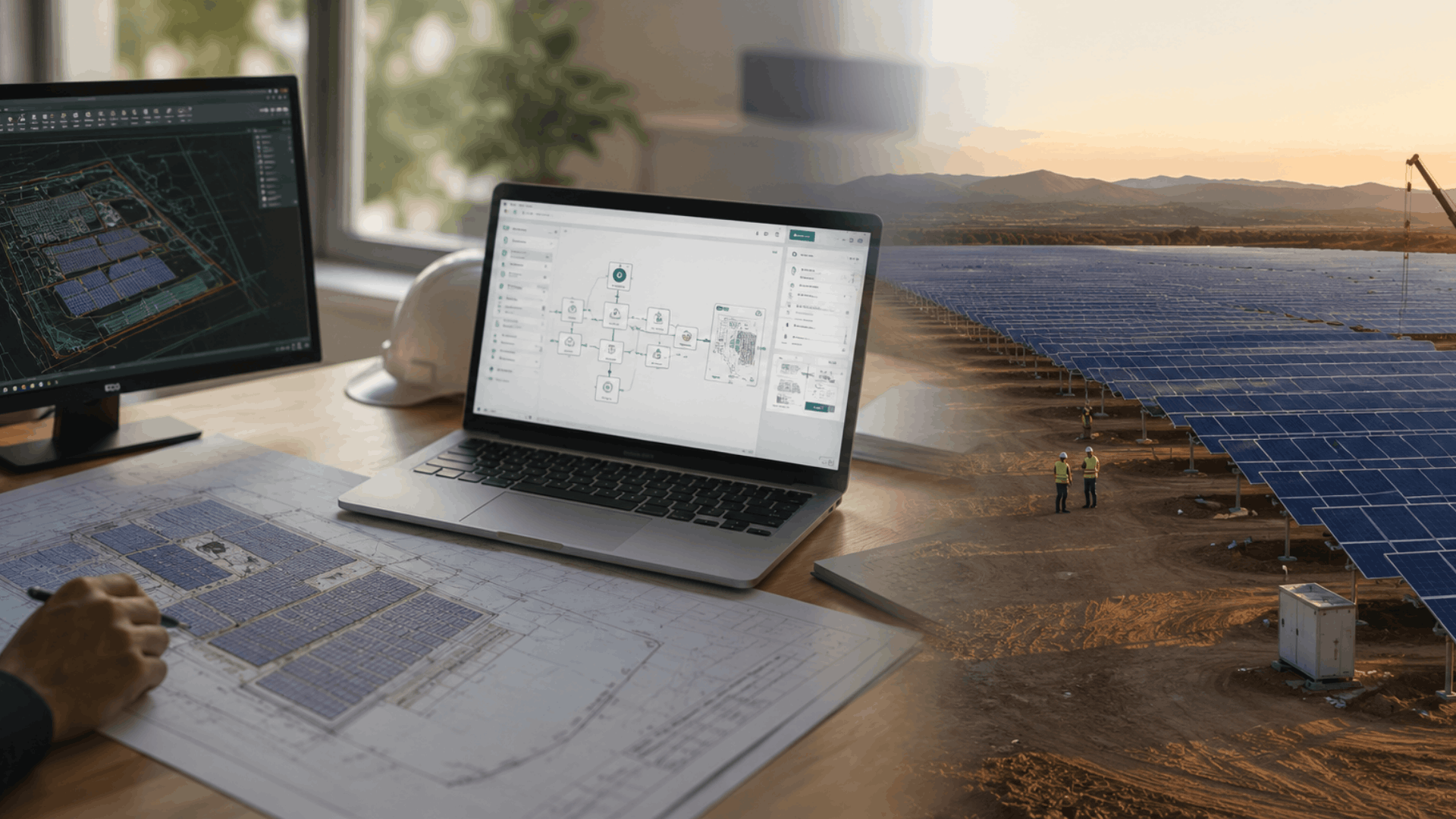
In today's fast-moving solar world, speed is no longer just an advantage; it’s a necessity. As the size and complexity of utility-scale solar projects grow, engineering teams face mounting pressure to deliver precise designs faster, despite having fewer resources and tighter margins.
The scenario highlights the need for solar design automation for growth.
The scenario highlights the need for solar design automation for growth.
The Design Bottleneck of Solar Projects
More often, the solar design workflows are manual and labour-intensive. The traditional approach of layout creation, electrical calculations, and creating drawings can be sufficient at smaller scales. However, as volume increases, they become a bottleneck.
Slow design cycles result in the following:
- Missed project timelines
- Increased engineering costs
- Increased errors and revisions
For EPCs, developers, and engineering consultants, this means revenue loss, market disadvantage and end-user dissatisfaction. Solar design automation can compress the concept-to-build cycle from months to days. This allows teams to complete their weeks of design work in days by automating repetitive and rule-based tasks.
Business impact
- Speedy project approvals
- Quicker procurement and project initialization
- Seamless project execution
In today’s market, any project delay is a missed opportunity, leading to a competitive disadvantage.
Do More with the Same
One of the major challenges the solar industry faces today is linear scaling, where the organisations focus on expansion by hiring more engineers. Solar design automation breaks this limitation.
With automated workflows:
This results in cost optimization, as engineers do less copy-paste work. This approach allows organizations to increase revenue without extensive hiring, leading to improved operations and profitability.
- Teams are equipped to handle more projects.
- Uniform logic to bring the same quality across the projects.
This results in cost optimization, as engineers do less copy-paste work. This approach allows organizations to increase revenue without extensive hiring, leading to improved operations and profitability.
Fewer errors, less rework, and less risk
With manual designs, organizations are the bigger risk, as every tiny oversight can turn into a cost overrun and construction delay. On the other hand, automated design tools have predefined rules, checks and validations throughout the design process.
This helps in:
This helps in:
- Improved design accuracy
- Fewer site-level surprises
- Reduced downstream corrections and claims
From a business standpoint, fewer mistakes translate into lower risks, better margins, and greater client trust.
Enabling Better Decision-Making Through Speed
The improved design cycles save time and result in smarter decisions. The solar design automation improves production and delivers quicker design alternatives based on the terrain conditions, equipment arrangements and layout strategies.
This empowers stakeholders to:
Today’s customers demand speed, transparency and flexibility. Hence, to stay market relevant, organizations should focus on design optimization to meet the changing customers’ demands.
Faster design cycles result in:
This, in turn, means better brand reputation and a higher win rate over time.
- Quicker adoption of the client’s or regulator’s changes.
- Data-driven bidding decisions
- Work with a combination of speed and smarter decisions.
- Improve customer experience and market position.
Today’s customers demand speed, transparency and flexibility. Hence, to stay market relevant, organizations should focus on design optimization to meet the changing customers’ demands.
Faster design cycles result in:
- Shorter turnaround times for proposals
- Greater responsiveness to client feedback
- Stronger long-term partnerships
This, in turn, means better brand reputation and a higher win rate over time.
Conclusion: Becoming Automated to Grow
Today, adoption of solar design automation has become more of a strategic business decision than merely a productive one. With better design cycles, organizations can improve operations, reduce costs and improve quality.
The big message behind all this!
Solar marketplace is no longer the same, as it has become more competitive over time. Hence, organisations should focus on productivity and move towards sustainability today and tomorrow.
Solar marketplace is no longer the same, as it has become more competitive over time. Hence, organisations should focus on productivity and move towards sustainability today and tomorrow.
About author
Shashwat Dhase
Shashwat Dhase is a Manager – Renewable Solutions at CCTech, driving green energy technology engagements and initiatives. He works closely with renewable energy developers, EPCs, and enterprise stakeholders to identify the right opportunities and deliver meaningful business outcomes. With strong expertise in consulting and strategic partnerships, he supports end-to-end customer success. He plays a key role in shaping CCTech’s renewable energy offerings by aligning market needs with effective technical execution. Passionate about innovation, he focuses on solving real industry challenges and accelerating digital transformation across the green energy sector.
To understand how the CCTech Green Energy Platform can support your needs, please connect with our author at shashwat.dhase@cctech.co.in
Comments
Recent posts