





Wednesday, August 26, 2026
Digital Twin and Why it matters for Manufacturing
By
Vijay Mali
Digital Twin in Manufacturing: What It Means and Why It Matters
For manufacturing leaders, the biggest challenge is to cut downtime, reduce waste, and bring products to market faster, without inflating capital costs. Today, digital twin is exactly doing the same. It has moved from research labs to the production floors. If you're evaluating where to invest your digital transformation budget this year, understanding what a digital twin in manufacturing actually is, and why it matters, is a good place to start.
Digital Twin Meaning: Beyond the Buzzword
To start with, it is quite easy to explain digital twin definition. It is the virtual representation of the physical object or system that updates itself in real-time using the actual data. This definition differs from such static digital twins as CAD models, which do not change after creation. Digital twin meaning here refers to the dynamic replication of a physical object and its performance during all life stages.
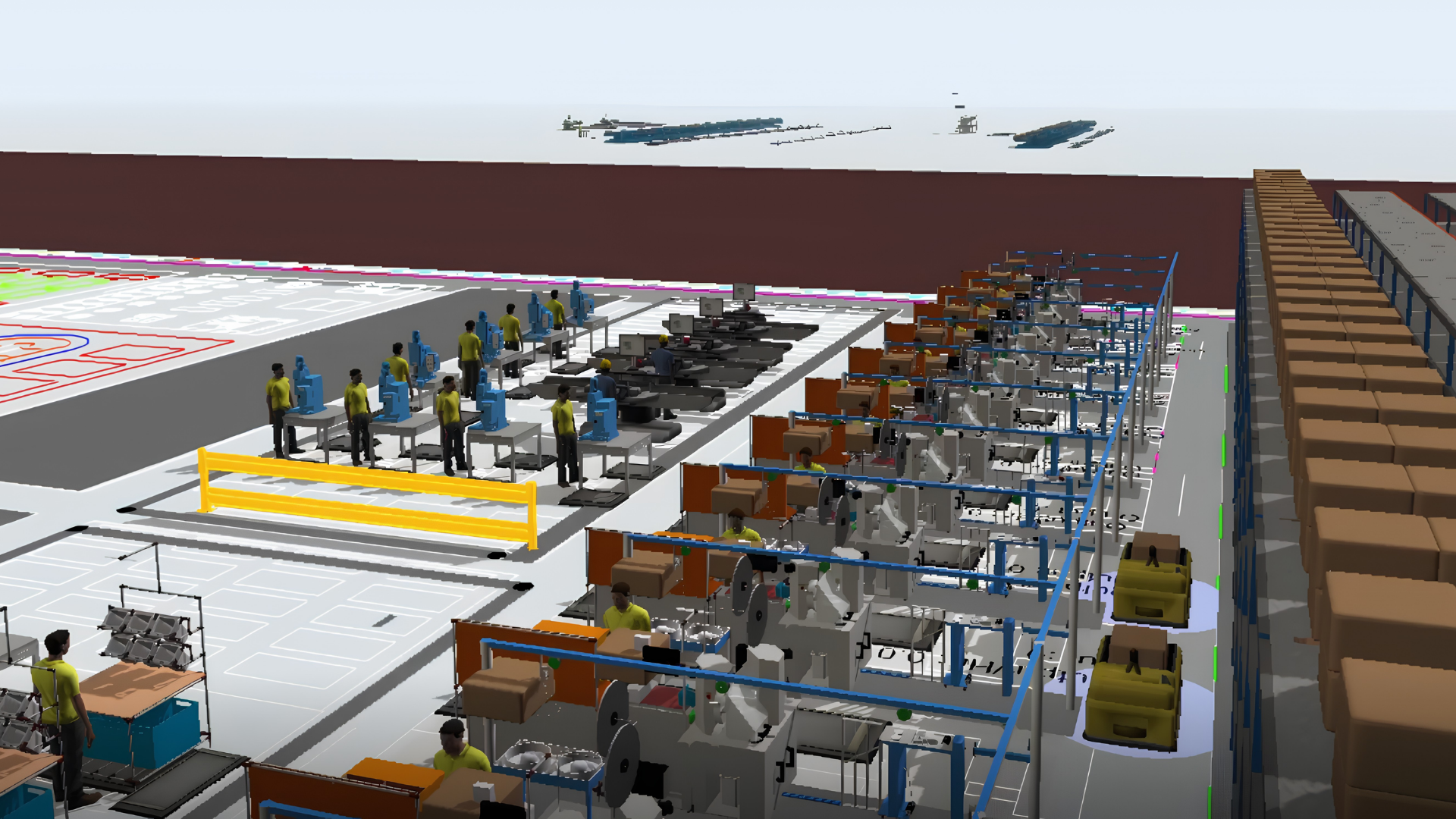
In case of digital twin manufacturing, the technology may be implemented on a single machine, production line, or even a whole factory. With help of various sensors and other data collection sources, digital twin modeling shows the real-life performance of the object and not how it should theoretically work.
The main advantage of digital twin technology is that plant manager does not have to wait until the machine breaks down to see what is going on.
The main advantage of digital twin technology is that plant manager does not have to wait until the machine breaks down to see what is going on.
The Digital Twin Concept in a Manufacturing Context
As a concept, digital twin is not new. Engineers have been using simulation models for over a decade. However, what has changed is the establishing a connection between simulation models and real-life data flows through IoT sensors, cloud platforms, and AI-powered analytics. The transition from the initial design stage of simulation to constant monitoring creates the essence of modern digital twin concept.
In manufacturing specifically, this concept applies across three levels, and understanding digital twin in manufacturing at each level is key to targeting the right investment
- Component level: Simulation of stress and thermal performance of single components.
- Machine level: Modeling the entire unit of machinery, from CNC machines to robot arms for predicting the maintenance schedule.
- Process level: Simulating whole process of production to find bottlenecks.
At each of these levels, the value created is different; however, combined, they provide the manufacturer with a single vision of its processes that has never been available before.
Why 3D Digital Twin Models Matter on the Shop Floor
A 3D digital twin adds a critical dimension that flat data dashboards can't offer: spatial and visual context. When engineers can see a rotating turbine, a conveyor system, or an assembly line rendered as a 3D digital twin and overlaid with live performance data, problems become intuitive rather than abstract.
A 3D digital twin allows manufacturing teams to:
This visual layer, delivered through a properly engineered 3D digital twin, is where CFD simulation and engineering-grade modeling genuinely elevate a digital twin from a data dashboard into a decision-making tool. It's one thing to see a temperature spike in a chart; it's another to see exactly which zone of a heat exchanger is causing it.
- Visually pinpoint where thermal stress or vibration is concentrated on a machine.
- Walk through a virtual factory layout before committing to a physical retrofit.
- Train operators in a risk-free virtual environment that mirrors the real equipment exactly.
This visual layer, delivered through a properly engineered 3D digital twin, is where CFD simulation and engineering-grade modeling genuinely elevate a digital twin from a data dashboard into a decision-making tool. It's one thing to see a temperature spike in a chart; it's another to see exactly which zone of a heat exchanger is causing it.
Digital Twin Technology: What's Powering the Shift
Digital twin technology today combines several layers working together:
- IoT sensors capturing real-time operational data from physical assets.
- Cloud and edge computing to process and store this data at scale.
- Simulation engines, including CFD and FEA models, that replicate physical behavior with engineering accuracy.
- AI and machine learning to detect anomalies, predict failures, and recommend corrective actions.
- Visualization platforms that render the twin in 2D dashboards or full 3D environments.
The maturity of digital twin technology now allows manufacturers to move from reactive maintenance to predictive, and eventually prescriptive, operations. Instead of asking "what went wrong," teams can ask "what will go wrong, and how do we prevent it." This predictive shift is arguably the most important part of the digital twin meaning for modern manufacturing.
Why Digital Twins Matter: The Business Case
Adopting a digital twin in manufacturing isn't an R&D indulgence — it's a direct lever on cost, uptime, and quality.
- Reduced unplanned downtime: Predictive insights from digital twin technology help identify equipment failure risks weeks in advance, rather than during a costly unplanned stoppage
- Lower prototyping costs: Testing design changes on a digital twin before physical implementation reduces the need for expensive physical prototypes and rework cycles.
- Faster time-to-market: Simulating production processes virtually compresses the validation cycle for new product lines, helping manufacturers respond faster to market demand.
- Energy and resource efficiency: A digital twin in manufacturing can model energy consumption patterns across a plant, identifying where efficiency gains are achievable without disrupting output.
- Better cross-team collaboration: A shared, accurate digital twin gives engineering, operations, and leadership teams a common reference point - reducing the back-and-forth caused by mismatched data or outdated documentation.
These aren't hypothetical gains. Manufacturers who have adopted digital twin technology report measurable reductions in maintenance costs and improvements in overall equipment effectiveness (OEE) - proof that digital twin in manufacturing is now a proven business case, not just an experiment.
Where CCTech Fits In
At CCTech, we've spent over two decades helping manufacturing enterprises apply engineering-grade simulation to real operational challenges.
We don't believe in generic dashboards dressed up as digital twins. Our approach combines deep engineering fundamentals - the same physics-based modeling used in aerospace and automotive R&D - with practical, scalable deployment for everyday manufacturing operations. The result is a digital twin that doesn't just visualize your plant, but genuinely understands the physics behind it.
Final Thoughts
The digital twin has moved from an emerging concept to a business necessity for manufacturers serious about operational efficiency. Whether you're exploring your first pilot project or scaling an enterprise-wide 3D digital twin strategy, the underlying question for any digital twin in manufacturing initiative is the same: how much value is currently locked inside your physical assets that a connected virtual model could unlock?
If you're evaluating digital twin technology for your manufacturing operations, CCTech's engineering-first approach can help you build a twin that's rooted in real physics, not just real-time data.
About author
Vijay Mali
Vijay is a technology explorer, a visionary and a product maker. As CBO of the company, he plays a critical role in defining the growh path of the company. He also leads the center of excellence (CoE) department at CCTech which is responsible for exploring new technologies & building a strategy to bring it to common designers. Vijay has over 15 years of experience in providing the CFD solutions for many complex problems. He has conceptualized many software solutions including the Pedestrian Comfort Analysis & Control Valve Performer app developed on simulationHub platform. Vijay is known for his transformative way of teaching and trained more than 500 candidates on complex topics like computational fluid dynamics and design optimization. He has delivered talks at various events and engineering colleges about CFD and its use in design optimization of a product. Vijay holds a master degree in aerospace engineering from Indian Institute of Technology (IIT Bombay).
Comments
Recent posts