





Thursday, October 01, 2026
AU 2026: Autodesk’s New Blueprint for Engineering AI Ecosystem
By
Umaiz Shaikh

AU 2026: Autodesk’s Engineering AI Ecosystem
Autodesk University 2026 was more than a product conference. It was a strategy announcement.
The specific product features shipping into Fusion, Inventor, and Vault are real and, in some cases, technically ambitious. AutoTimeline, Find Similar, AutoAssemble, the Assistant integrations into Inventor's APIs, and Vault's search will change how manufacturing organizations work over the next twelve months. But those aren't the announcements that matter most to firms building engineering software on top of the Autodesk platform.
The announcement that matters is Assistant Builder, and what it says about the architecture Autodesk has now publicly committed to.
What Autodesk has now committed in writing
One question has been open for several years:
"Whether Autodesk would absorb specialized engineering capabilities into its products or leave space for specialist partners."
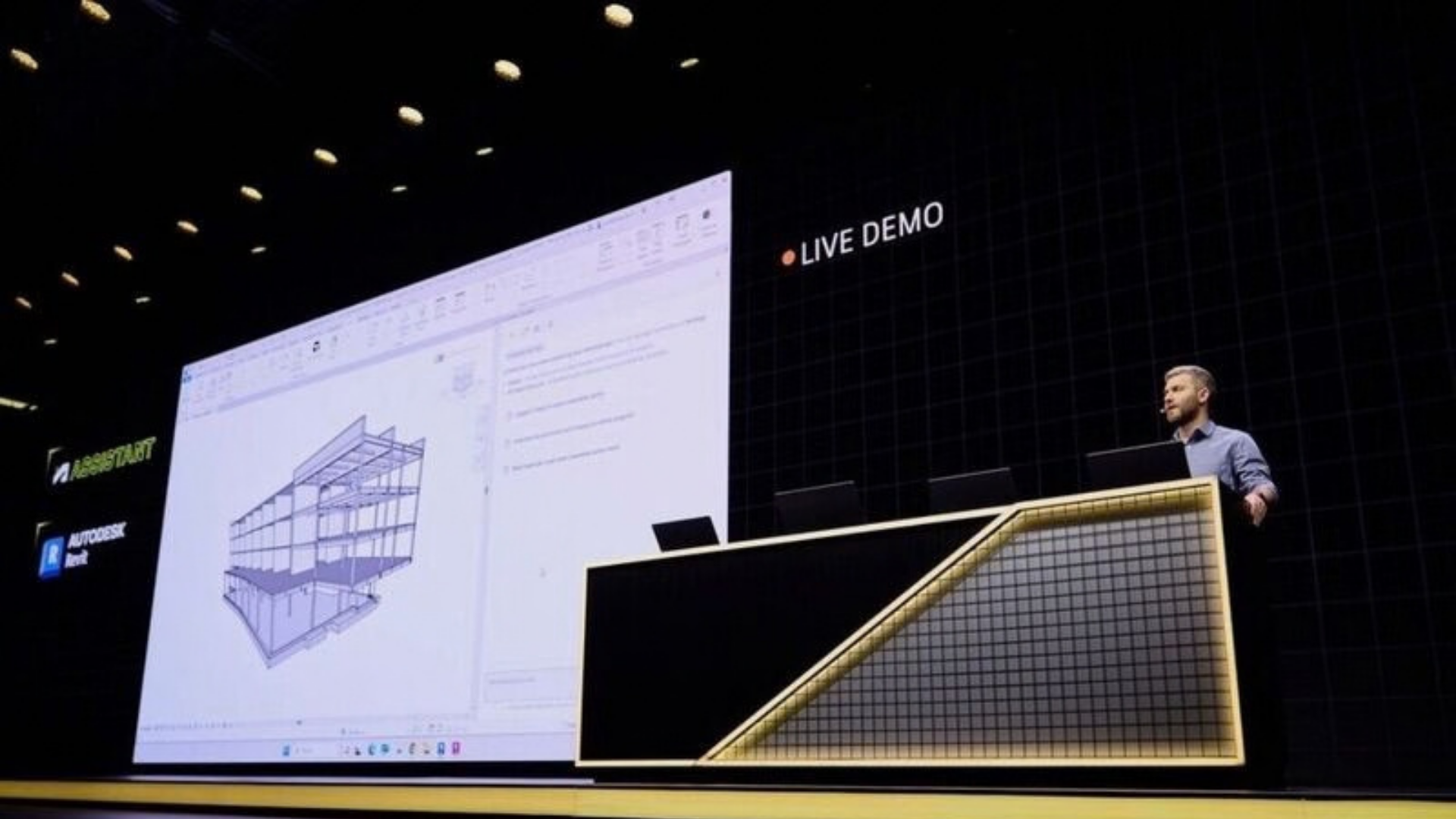
Every partner building on Autodesk Platform Services (APS) has operated without knowing which side of that line their capability sits on. AU 2026 closed the question. The AI orchestrator acts as the substrate connecting frontier LLMs, Neural CAD, deterministic geometric engines, and MCP. It shows that Autodesk will build the platform, orchestration layer, and assistant operating above their products. Specialist engineering intelligence that runs on top of these is expected to come from partners. Raji Arasu's framing was the clearest:
"Your AI, your partners' AI, and Autodesk AI working together in one experience."
This is not implicit. This is the architecture.
The technical direction underneath the announcement
Three technical readings follow, each more consequential than any individual feature announced.
-
The value of engineering AI is defined by depth of grounding, not breadth of model. Neural CAD, the foundation models behind Find Similar, and the Orchestrator's selective routing to deterministic geometric engines all point to the same claim: AI that works in engineering must operate on actual engineering data structures, including geometry, constraints, relationships, not just on text descriptions. Haley conveyed it directly:
"We don't have to use AI if you want precision."
General-purpose LLMs are one input among several in this architecture, not the platform itself. - MCP is the connective tissue. For a specialist engineering firm, the correct architectural pattern for exposing capability into Autodesk's environment is now an MCP server, not a traditional integration. Traditional integrations require users to leave the workflow to use the capability. MCP-exposed capabilities do not. The economics of specialist software changes accordingly.
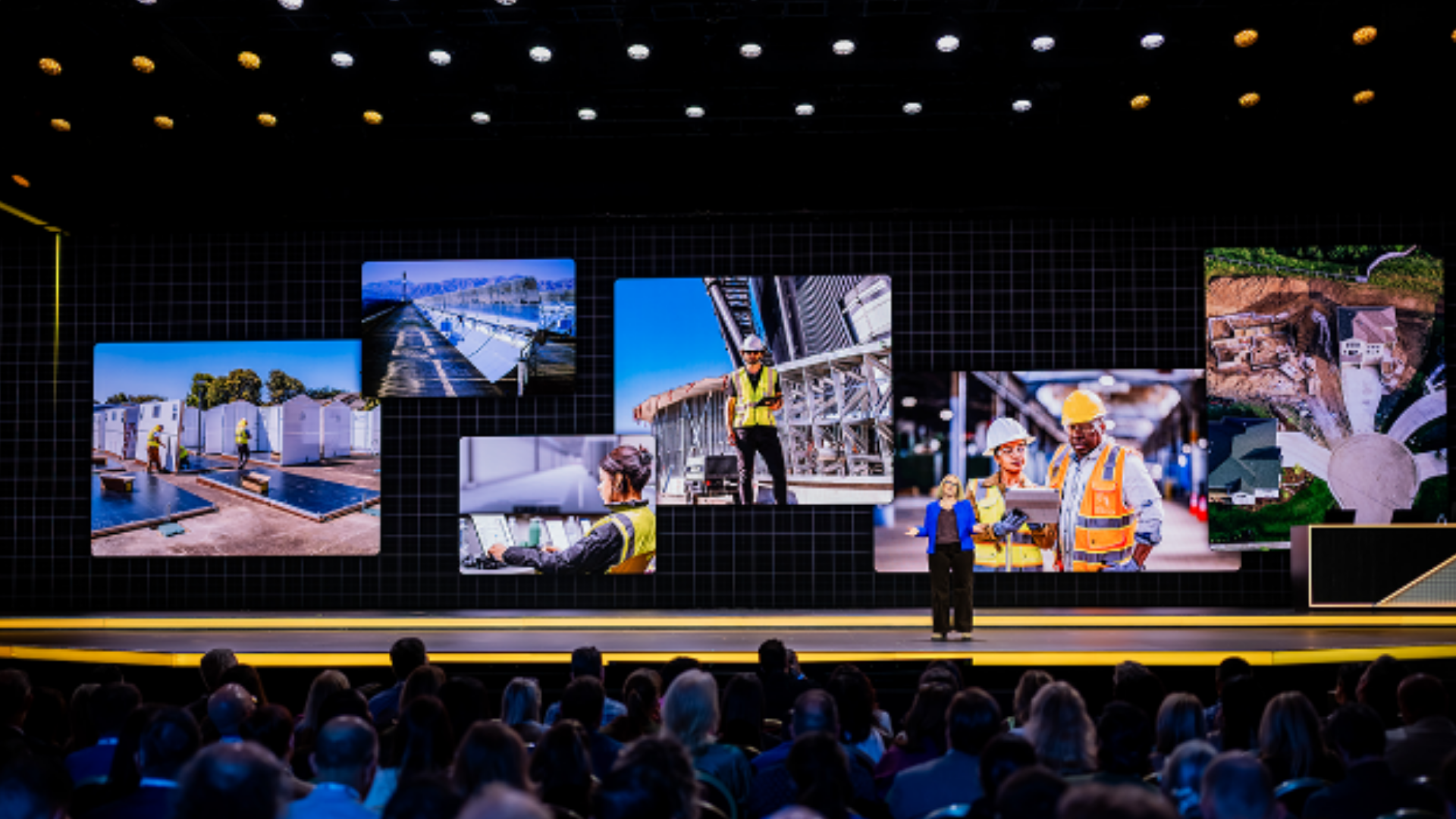
- The addressable surface is an order of magnitude larger than the seat count. Autodesk's own research cited at AU states that for every core-tool user, roughly ten adjacent roles touch the same project without opening the core application. Assistant Builder is architected for that broader group as much as the core one. Any specialist firm evaluating investment against Revit or Fusion seat-counts is measuring the market wrong.
Where we already stand
Autodesk has now announced the direction we have been arguing publicly for over a year.
Our technical publication earlier this year titled 'From Design to Decision Intelligence in Engineering Workflows' argued that engineering software was moving from assistance to decision intelligence, and the platforms that succeeded would be the ones that grounded AI in engineering data structures rather than in generic language models. Our other publication 'Engineering intelligence as MCP tools' followed the specific architectural claim: specialist engineering capability belongs in Autodesk's ecosystem as MCP tools. Both were published before AU 2026. Both now read as descriptions of the architecture Autodesk formally committed to at the conference.
CCTech's technology stack includes APS integration, CFD and physics IP, cloud-native deployment, and our simulationHub platform. And this composition is what Assistant Builder is designed to plug into. Not because we tuned it after the announcement, but because that composition follows from the thesis: specialist engineering intelligence, grounded in actual domain data, exposed through APS-native and MCP-compatible surfaces.
Assistant Builder did not change what we are building. It confirmed the ground we chose.
What we are doing about it
Publishing specialist engineering capabilities as MCP servers on Autodesk's marketplace, starting where our IP is the deepest: hydraulic modeling, CFD, geometry and mesh validation, and simulation setup.
Positioning our specialist AI investments across localization engineering, water infrastructure interoperability, and simulation intelligence. This ensures they are consumed inside Autodesk workflows through the standalone Assistant when it ships in 2027, rather than as external tools that users can access only by leaving the workflow.
Deepening the engineering grounding across the domains we already work in, so specialist capabilities remain non-substitutable as general-purpose AI improves.
Conclusion
Autodesk will not build every specialized engineering capability on its own. They have now formally invited specialist partners into the primary workflow.
The window between now and the standalone Assistant's 2027 rollout is when the specialist's capability becomes non-substitutable. We are using that window to build!
About author
Umaiz Shaikh
Umaiz Shaikh is Head - AutoCAD Toolsets at CCTech, driving strategic growth and solutioning across the Autodesk ecosystem. He works closely with Autodesk stakeholders and internal teams to identify opportunities, shape scalable solutions, and deliver impactful outcomes. Operating at the intersection of business and technology, he focuses on translating ecosystem insights into actionable strategy. His work contributes to strengthening CCTech’s position as a trusted and strategic Autodesk technology partner.
Comments
Recent posts